


We spent a whole day exploring the island of Roatán in Honduras during our cruise on the Icon of the Seas. Instead of setting off on our own, we opted for a private, guided tour of the island. Between tropical rainforest, impressive viewpoints, exotic animals, great photo spots and relaxed beach moments, Roatán revealed itself as a versatile, authentic and surprisingly original Caribbean island.
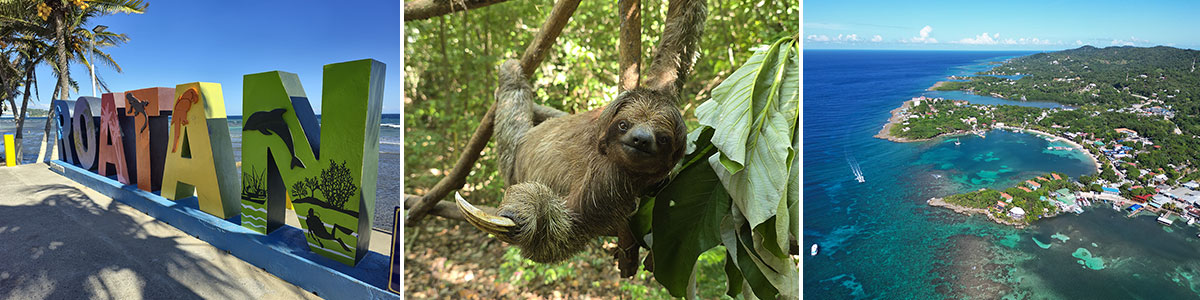
Table of contents
Where is the island of Roatán?
The island of Roatán is located in the western Caribbean and belongs politically to Honduras in Central America. It is part of the so-called Islas de la Bahía (Bay Islands), which also include Utila and Guanaja. Geographically, Roatán is located around 65 kilometers off the north coast of Honduras.
Good to know: Roatán is located directly on the Mesoamerican Barrier Reef (Great Maya Reef), the second largest coral reef in the world – after the Great Barrier Reef in Australia. It stretches over 1,000 km along the coasts of Mexico (Yucatán), Belize, Guatemala and Honduras. The location makes Roatán one of the best diving and snorkeling areas in the Caribbean. The island is a popular destination for cruise ships, especially on Caribbean routes from the USA.
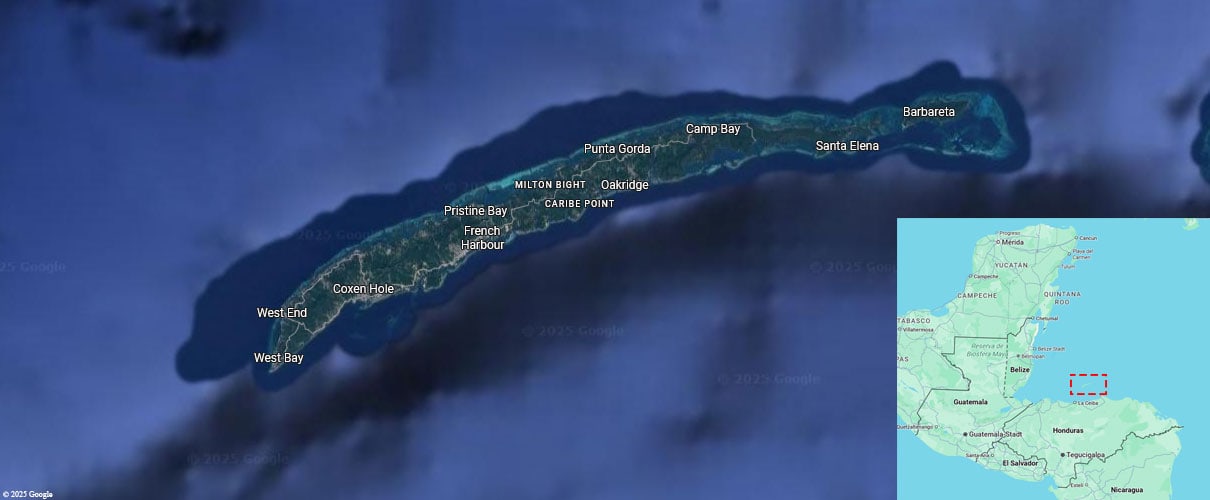
The location of the island of Roatán (Honduras)
Interesting facts about the island of Roatán
The island of Roatán is the largest of the Honduran Bay Islands and is located around 65 kilometers off the north coast of Honduras in the western Caribbean. With a length of around 77 kilometers and a width of up to 8 kilometers, it covers an area of around 83 square kilometers and is home to around 75,000 inhabitants.
The island is characterized by an extraordinarily diverse history: originally settled by indigenous peoples, Roatán served as a refuge for pirates in the 17th century before it was temporarily under British influence and eventually became part of Honduras. This past is still reflected today in the cultural diversity – English is widely spoken alongside Spanish. The island’s economy is mainly based on tourism, particularly cruise tourism and the diving and snorkeling business, as Roatán is surrounded by the Mesoamerican Barrier Reef, the second largest coral reef in the world.
The tropical climate ensures warm temperatures of between 26 and 30 degrees Celsius all year round, making the island an ideal destination for sun and beach lovers. In addition to beautiful beaches, Roatán offers lush vegetation, hilly landscapes, species-rich wildlife and numerous nature reserves and protected areas that promote sustainable tourism. Despite modern ports and tourist infrastructure, Roatán has retained its original, relaxed Caribbean charm in many places and is considered one of the most diverse and authentic travel destinations in the western Caribbean.
The Port Roatán in Coxen Hole
Our day began at around 8.30 am at Port Roatán in Coxen Hole, the largest port on the island and one of the most important cruise ports in the western Caribbean. The port is modern, clearly laid out and specially designed for cruise guests. Stores, restaurants, souvenir stands and organized meeting points for excursions await you as soon as you step off the ship. Coxen Hole itself is the economic center of the island and appears much livelier than the touristy beach resorts in the west. Traffic, local markets and authorities characterize the cityscape. For many visitors, Coxen Hole is more of a transit point than a highlight – the real magic of Roatán begins outside the town.


Our island tour on Roatán – private tour instead of mass excursion
In order to explore the island of Roatan in the best possible way and also incorporate exciting activities for our kids into the daily routine, we opted for the private tour“The Perfect Family Day” with Mike Roa Tours. Our guide was a local, spoke perfect English and provided us with exciting stories, historical background and personal impressions of life on Roatán throughout the trip. The route took us right across the island – from Coxen Hole via the island’s interior to the west to West End. We combined nature, viewpoints, animal parks and the beach.
Mayan Eden Eco Center
Our first stop was the Mayan Eden Eco Center, a natural animal and nature park in the green interior of the island. The focus here is on sustainability, species protection and environmental education. On narrow jungle paths we encountered sloths, capuchin monkeys, parrots, toucans and iguanas. The guide from the zoo explained a lot about Roatán’s wildlife and the challenges posed by tourism and habitat loss. The Mayan Eden Eco Center is not a classic zoo, but rather a retreat for animals that can no longer be released into the wild.
The Mayan Eden Eco Center is one of the most visited attractions for cruise guests on Roatan. It is definitely advisable to get here as early as possible before all the tour groups arrive. Our guided tour through the park lasted about 45 minutes. Every guest has the opportunity to take a photo with a sloth, but due to the large number of tour groups, this is a bit like mass processing. This is certainly stressful for the animals and is therefore less recommended.


Photo spot: Mirador Roatán
Our next stop was only 3 minutes away by car. The Mirador Roatán is a viewpoint high above the island. From here, a spectacular panoramic view opens up over the jungle, the coastline and the Caribbean Sea. From here we also had a good view of our huge cruise ship Icon of the Seas in the port of Coxen Holen.
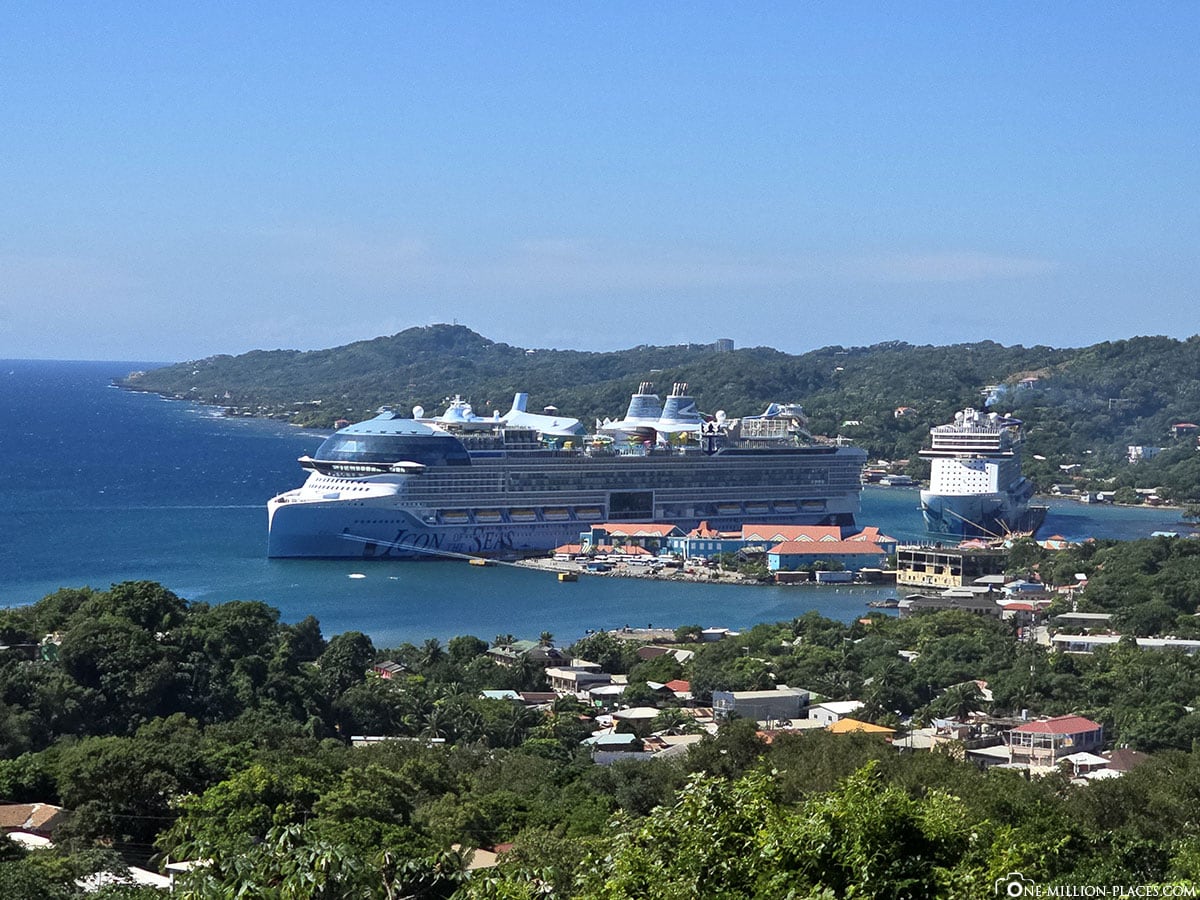
Photo spot: Mirador Roatán
Arch’s Iguana and Marine Park
We continued on to Arch’s Iguana and Marine Park, a private conservation area dedicated to the preservation of the green iguana – a species native to Roatán. The animals move freely around the grounds and are surprisingly trusting. You even get the chance to feed the iguanas. The visit is entertaining and ideal for cruise guests with limited time.


Animal Encounter “La Hacienda del Cielo”
At lunchtime we reached La Hacienda del Cielo, an extensive “Animal Encounter Park”, which is idyllically situated in the hilly interior of the island. The park combines nature experiences and encounters with animals in a peaceful, natural environment. The spacious enclosures are home to sloths, monkeys, exotic birds and iguanas, some of which have been rescued from difficult conditions. Visitors have the opportunity to experience the animals up close and learn a lot about their way of life, their natural habitat and the challenges of species conservation in Honduras.
The La Hacienda del Cielo zoo was much more relaxed than the Mayan Eden Eco Center.


French Cay Marine Park
Another fascinating place on Roatán is the French Cay Marine Park, which is often visited as part of island tours and specializes in the protection of marine wildlife. The park is located on a private area near the south coast and combines nature experience with environmental education. Visitors can see various sea creatures up close, including sharks, rays, sea turtles and tropical fish, which live in separate, near-natural pools. The aim of the French Cay Marine Park is to create an understanding of the sensitive ecosystem of the Mesoamerican Barrier Reef and at the same time provide insights into the importance of marine conservation. The park is an exciting stop, especially for cruise passengers, as it is compact, well organized and informative. At the same time, it shows how strongly Roatán’s identity is linked to the sea and what responsibility sustainable tourism bears for the preservation of this unique underwater world.
We didn’t visit the French Cay Marine Park ourselves, but were able to take a few drone shots and admire the beauty of the region from a bird’s eye view.


Photo spot: M-Alexand shipwreck in Dixon Cove
One of the most unusual stops on our day trip was the shipwreck of the M-Alexand in Dixon Cove. The half-sunken cargo ship lies just a few meters off the coast and is clearly visible from the roadside. Together with the bright turquoise water and the lush green coastal landscape, the rusty wreck is a great photo motif. The M-Alexand ran aground off Dixon Cove in 1981 after becoming unmaneuverable in heavy seas. Instead of salvaging the ship completely, it remained in place and over time became an integral part of the coastal landscape. In addition, the M-Alexand is the largest shipwreck in the waters around Roatán, with a capacity of 4,064 tons.
In the meantime, M-Alexand has developed into a popular diving and snorkeling spot. The wreck serves as an artificial reef and provides a habitat for numerous marine creatures. Divers report shoals of tropical fish, coral growth and occasional encounters with rays or barracudas.
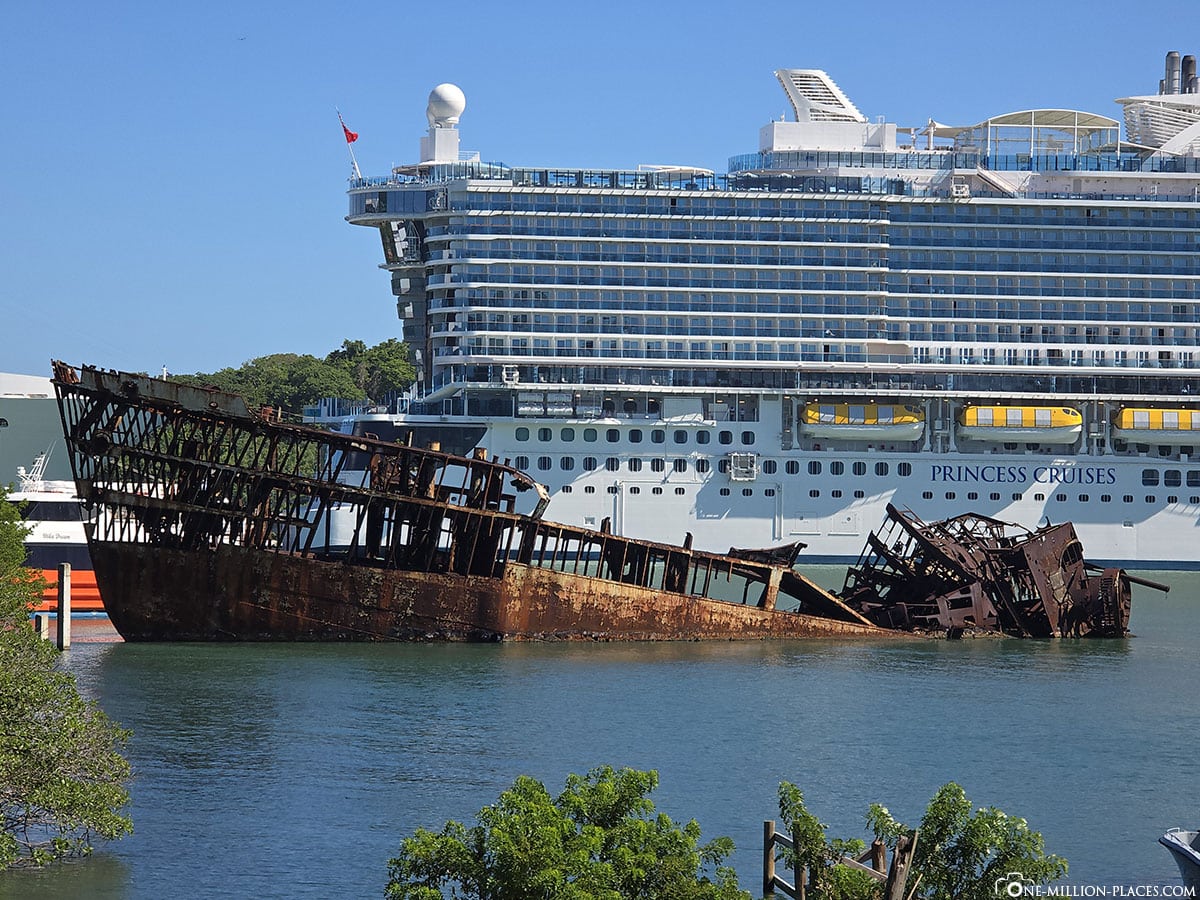
Photo spot: M-Alexand shipwreck in Dixon Cove
Beach time in Half Moon Bay
Things became more relaxed in the afternoon: our journey continued to Half Moon Bay in the popular village of West End. The crescent-shaped beach with fine sand and calm waters is perfect for swimming and snorkeling. Bars, diving schools and small restaurants line the bay. And we were able to see where Half Moon Bay got its name from with our drone from a bird’s eye view 🙂
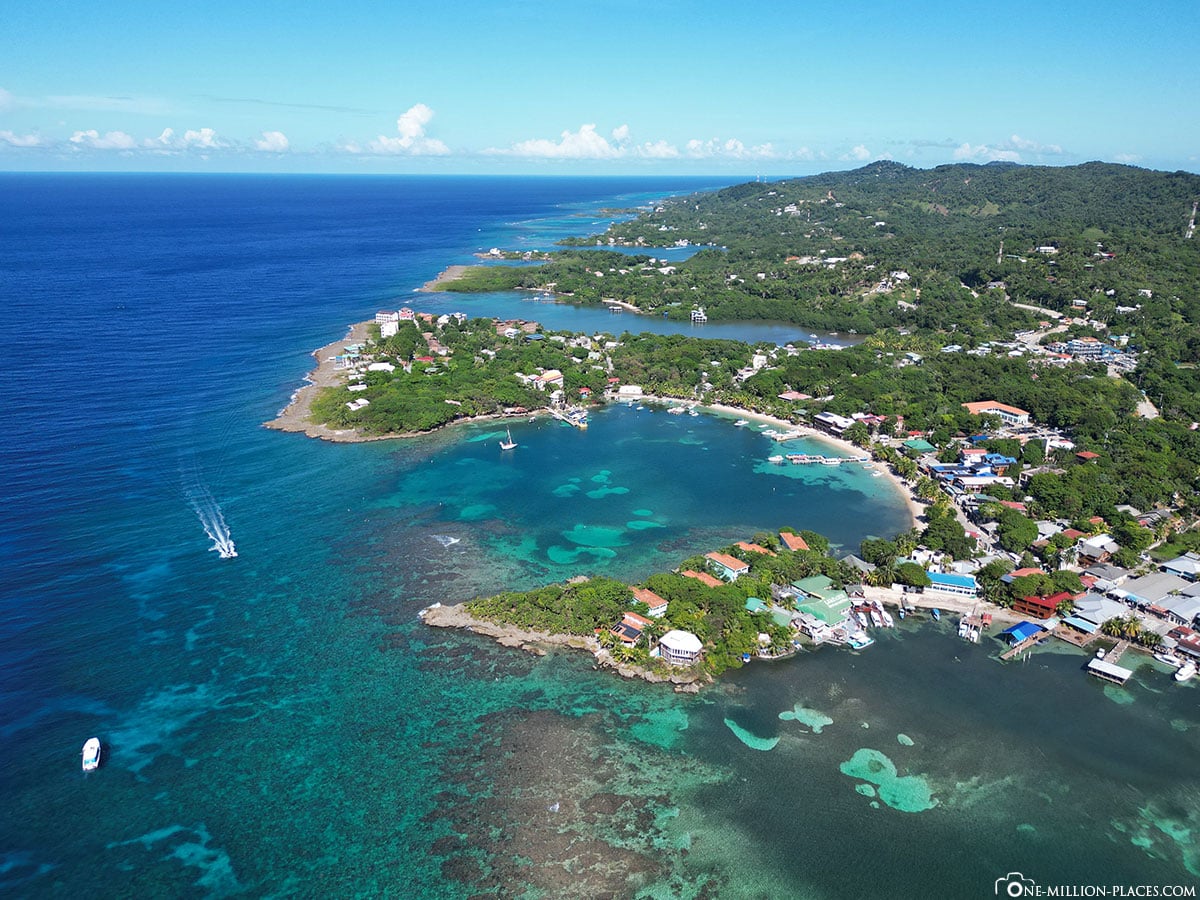
Half Moon Bay in Roatan (Honduras)
Here you can feel the relaxed island rhythm of Roatán. However, we have to say that we weren’t really impressed by the beach. It is relatively narrow and there was a lot of dirt lying around. The beaches of West Bay with its many luxury resorts are certainly better suited for a nice day at the beach.


Photo spot: Drone shots of West End
West End also showed its best side from the air. The combination of colorful houses, palm trees, boats and the shimmering sea is perfect for drone shots.


Photo spot: Roatán-Sign
Finally, a classic was not to be missed: the Roatán Sign. The colorful island sign is a popular photo motif and the perfect end to an eventful day. Travelers from all over the world meet here – a small symbol of the international appeal of this Caribbean island.
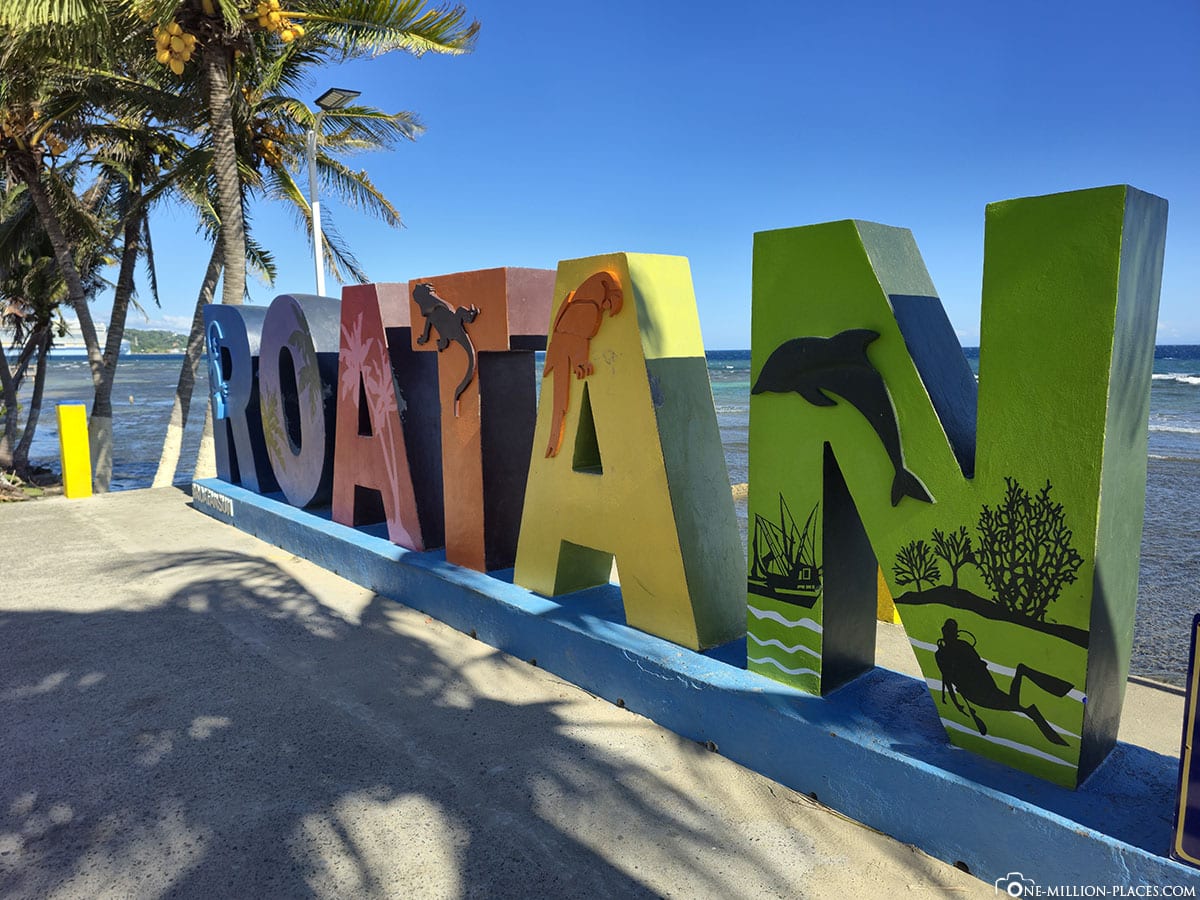
Photo spot: Roatán-Sign
Other sights & activities on Roatan
In addition to the places we visited on our day trip, Roatán offers many other sights that we unfortunately didn’t have time to see. These include the French Cay Marine Park, a sanctuary for sharks, rays, turtles and colorful tropical fish, the Gumbalimba Park, a tropical nature and adventure park with monkeys, birds and rainforest trails, and the Little French Key Resort, a privately run island paradise with beaches, animal park and water sports. With more time, we could also have visited the Roatán Chocolate Factory, a local chocolate factory where you can experience the production of cocoa and chocolate, including a tasting.
Take a look at GetYourGuide, where you’ll find a large selection of tours for the island:
Our conclusion: how did we like the island of Roatán?
Roatán is not a typical vacation destination like many other islands in the Caribbean. But we were delighted that we were able to spend a day exploring the island during our cruise on the Icon of the Seas. We were able to gather some impressions of the island and , as passionate divers, would of course have liked to see some of the fascinating underwater world. But we’ll have to save that for next time 😉