


Crystal River on Florida’s Nature Coast is a place for anyone who wants to experience Florida away from theme parks and the hustle and bustle of the big city. Instead, you will find crystal-clear freshwater springs, mangrove canals, quiet bays and a relaxed small-town atmosphere. Crystal River is best known as the “Home of the Manatee“, because (almost) everything here revolves around manatees. In this region, you have a particularly good chance of seeing the peaceful manatees in their natural environment – especially in the cooler winter months, when they frequent the region’s warm springs. In this article you will find tips for an eventful stay in Crystal River.
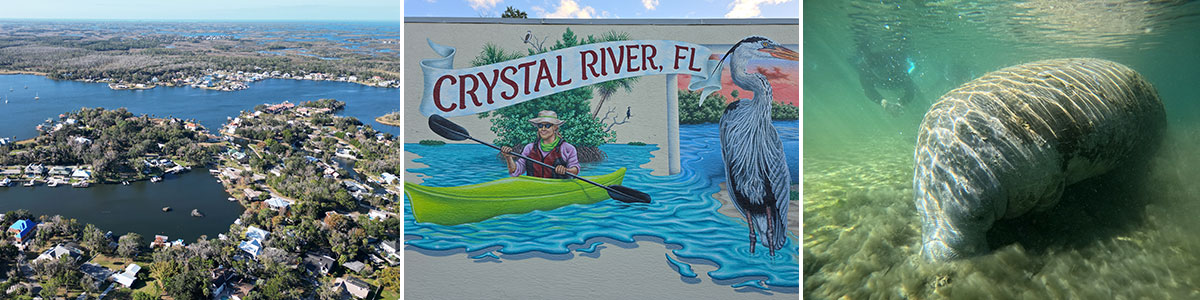
Table of contents
Where is Crystal River located?
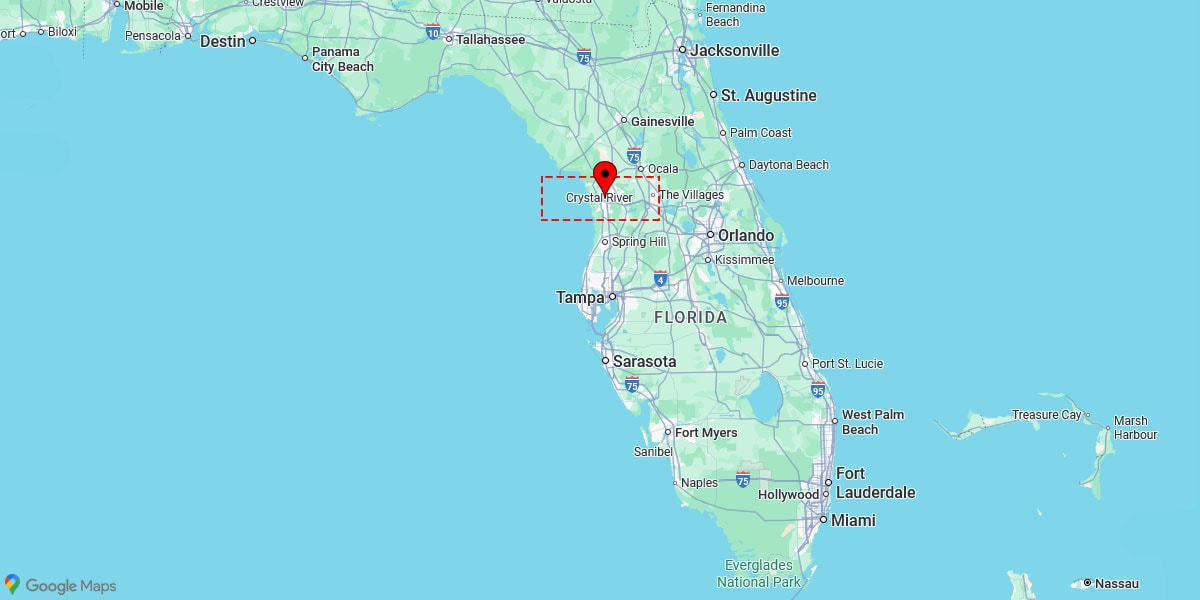
Crystal River is located on the west coast of Florida in Citrus County, about 120 kilometers north of Tampa on the so-called “Nature Coast”. The city is nestled around Kings Bay, a large, spring-filled bay that is connected to the Crystal River and the Gulf of Mexico via waterways. Crystal River is a perfect stopover if you’re on a Florida road trip: from Tampa, it’s about an hour’s drive north (depending on the route), and Crystal River is also easy to reach from Orlando if you want to leave the theme parks behind.
Where is Crystal River in Florida?
Things to know about Crystal River
Crystal River is a small town with a population of around 3,500 and a strong connection to nature. The surroundings are dominated by water: In addition to Kings Bay, canals, lagoons, spring basins and small islands characterize the picture. There are dozens of springs in the region that provide the famous water quality – there are often said to be over 70 springs in the system around Crystal River. These underground freshwater springs continuously feed the bay with crystal-clear water, which remains at a relatively constant temperature all year round. It is precisely this spring water that makes the region particularly attractive – especially for manatees looking for warmer retreats in winter.
Another exciting point is the history: Crystal River is not only a natural destination, but also archaeologically significant. There are prehistoric sites and mounds in the area, which show that the region was an important place for indigenous cultures many centuries ago. This is still visible today in the Crystal River Archaeological State Park. After the Second Seminole War, the Armed Occupation Act (1842) encouraged the settlement of settlers; later, agriculture and early industries such as citrus cultivation, turpentine and cedar mills, as well as the phosphate boom, characterized the development. The railroad, which connected Crystal River with the Ocala/Silver Springs area in 1888, also provided a major boost. It was officially incorporated as a town in 1903 and as a city on July 3, 1923.
Instead of large resorts, Crystal River is home to many small lodges, motels and vacation homes, as well as providers of boat tours, kayak rentals and guided manatee excursions. Especially in the cooler months – when the chances of manatee sightings are highest – Crystal River is a hotspot. Nevertheless, the city feels more like a retreat: you can sit by the water, watch pelicans and herons, take a leisurely drive through the streets and be in the middle of nature in just a few minutes.


Clear map of Crystal River
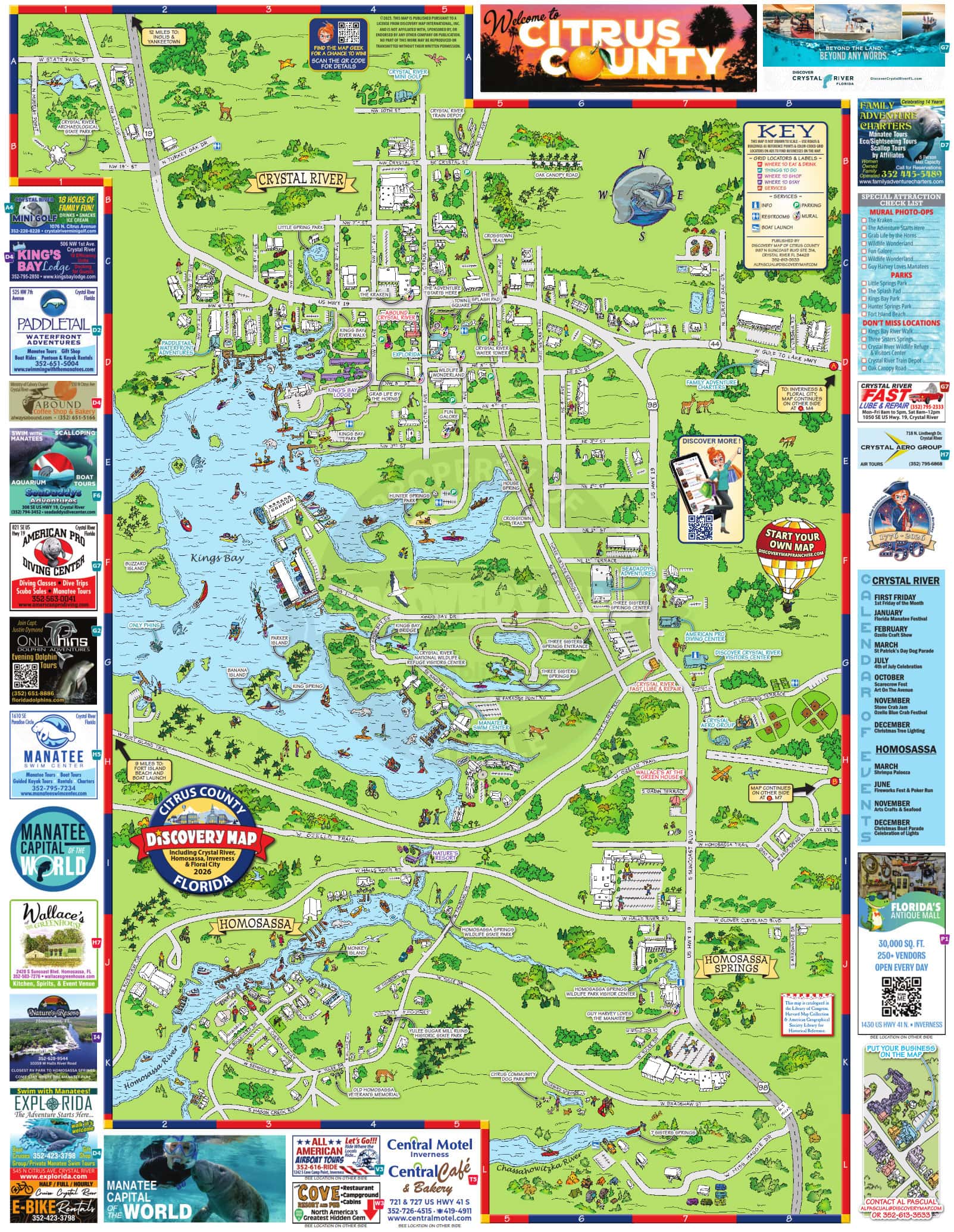
On the following map from Discover Crystal River you will find a great overview of the Crystal River, Homosassa and Homosassa Springs region.
Map of Crystal River in Florida, USA
Our accommodation: PaddleTail Waterfront Lodge
We stayed for 2 nights at the PaddleTail Waterfront Lodge – an accommodation that fits perfectly with Crystal River because the focus here is on the water and outdoor experiences. The hotel on US-19 is an ideal base for typical activities such as manatee tours, kayaking and boat trips. The Paddletail Lodge is not a completely new hotel, but has been repositioned and modernized under a new name in recent years: It still appears on several booking portals as the Best Western Crystal River Resort, while today it is managed as the PaddleTail Waterfront Lodge and part of the Trademark Collection by Wyndham.


The lodge has a total of 113 rooms. The rooms are simple, but we liked them. Amenities include free Wi-Fi, complimentary breakfast, outdoor pool and hot tub, as well as a dock/jetty and water-related activities such as kayaking and boat tours.


Activities in Crystal River
In Crystal River, (almost) everything revolves around manatees. But of course there are many other activities and experiences that you can enjoy in the city or the surrounding area.
Crystal River Historic Downtown
Old Town Crystal River is the charming, historic heart of the city – small, relaxed and perfect for a stroll away from the typical Florida high streets. Around the old streets you will find local boutiques, galleries, cafés and some really good spots for fresh seafood. The neighborhood feels a bit “Old Florida”: less glossy, more authentic coastal town. We also found some beautiful murals here.


Mertailor’s Mermaid Aquarium Encounter
The Mertailor’s Mermaid Aquarium Encounter is an unusual but entertaining addition to the classic outdoor program. It’s an indoor aquarium experience with a playful mermaid theme – ideal if the weather isn’t playing ball or if you’re looking for a change of pace. The aquarium is located in Lecanto in Citrus County on the W. Gulf to Lake Highway (SR 44) – just a short drive from the Nature Coast around Crystal River. From the outside it looks like a rather inconspicuous indoor attraction, but inside visitors can expect a mixture of aquarium and a large sea pool where the mermaid performances take place.


The story behind the aquarium is fascinating: Mertailor, a company that originally started out as a workshop for mermaid fins and thus served a niche market worldwide, is behind the aquarium. The idea of not only building products, but also bringing the whole world of mermaids to life, first developed into a meeting place with a show character – and then, step by step, into a genuine aquarium experience with educational aspirations.


Today, the Mermaid Aquarium Encounter combines fantasy with marine science: the centerpiece is a large saltwater tank in which “mermaids” appear seemingly weightless among fish, rays and other sea creatures during shows. There are also touch and learning areas where guests can carefully experience selected animals under supervision, as well as changing insights into the care, keeping and protection of marine animals. Overall, the concept is like a combination of family outing, mini aquarium and underwater theater – ideal if you want to experience something unusual in addition to nature in Crystal River and the surrounding area.


Crystal River National Wildlife Refuge (Three Sisters Springs)
The Crystal River National Wildlife Refuge is one of the most important protected areas for manatees in the USA – and Three Sisters Springs is considered its most famous highlight. The springs feed Kings Bay all year round with constantly warm, crystal-clear water (around 22 °C), which becomes a real magnet for manatees in winter: As soon as the temperatures in the Gulf and the rivers drop, many animals retreat to the sheltered, warm springs.
Map of the Three Sisters Spring in Crystal River
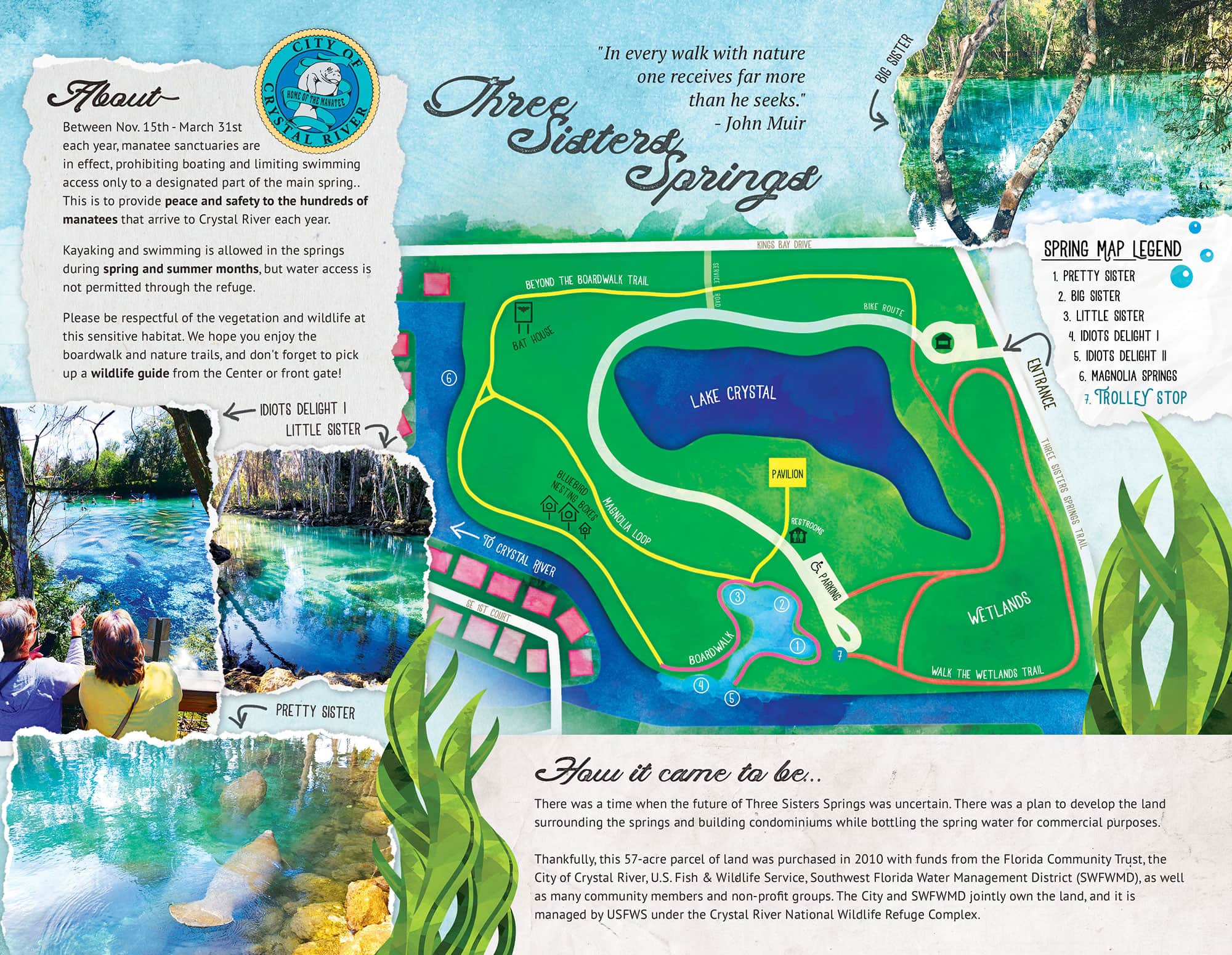
Three Sisters Springs consists of several spring basins connected by narrow channels – a sensitive and shallow ecosystem. Depending on the season and the number of manatees, certain areas can be designated as protection zones or temporarily closed to water access to ensure the animals have undisturbed resting places.
We parked our car at the Three Sisters Springs Visitors Center (location in Google Maps) and got tickets for the entrance. This currently costs $12.50 in the summer months (April 1 – November 14) and $20 in the peak winter season (November 15 – March 31). From the Visitor Center you can either walk to the springs (approx. 1 kilometer, 15 minutes) or take the free shuttle. In the park, you walk along a beautifully designed boardwalk to the springs and watch the manatees from above (without going into the water). Alternatively, you can also reach the Three Sisters Springs by boat or kayak/SUP – without paying an entrance fee. You start at a public launch in Kings Bay (e.g. Hunter Springs Park or Kings Bay Park) and drive or paddle to the spring run approach of Three Sisters Springs.


Hunter Springs Park
Hunter Springs Park is located directly on Kings Bay in Crystal River and is one of the most popular spots if you want to combine nature, water and a relaxed park atmosphere. The park offers a small beach area with very clear water, shady picnic areas and short paths to viewpoints on the shore. Hunter Springs Park is also an important starting point for activities on the water. From here, kayaks and SUPs can be paddled to various destinations in Kings Bay, and many use the park as a base to head to Three Sisters Springs (when open seasonally) or through the quiet bays. Parking in the parking lot costs 5 US-$ per vehicle for the whole day, but there are also some free parking lots outside, e.g. here.


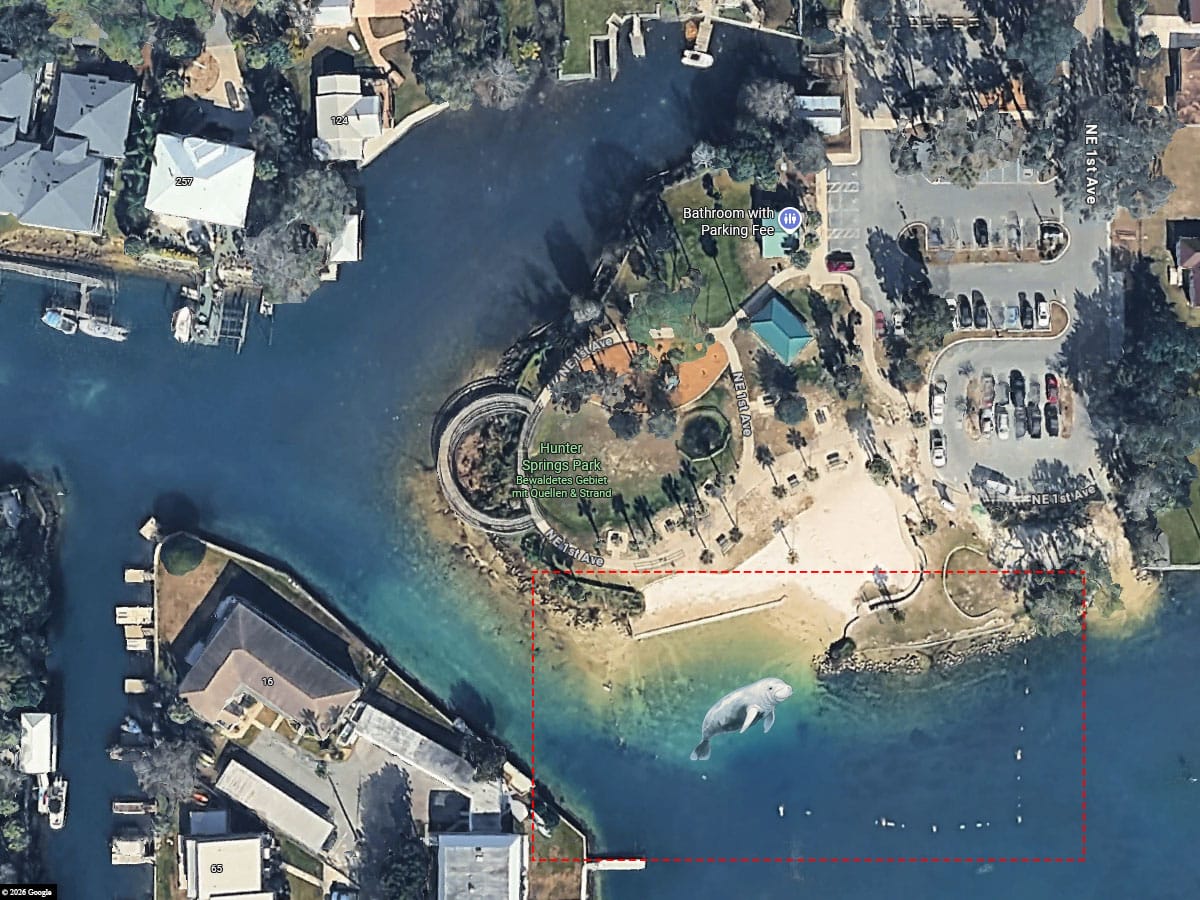
Swimming with manatees in Hunter Springs Park
Kings Bay Park
Kings Bay Park is a small riverside park in the middle of Crystal River. The benches and shore area look out directly over the tranquil Kings Bay, often with pelicans, herons and other water birds in sight. The park has a more local and relaxed feel: a good place for a short break, a picnic or to end the day by the water. In the cooler season, there is always a chance of spotting a manatee from the shore.
Ellie Schiller Homosassa Springs Wildlife State Park
Ellie Schiller Homosassa Springs Wildlife State Park is one of the best-known places to see Florida’s wildlife in one place. Instead of a classic zoo, the park is like a natural history tour through different habitats – with a focus on native species such as manatees, alligators, otters, turtles and a wide variety of birds.
The site used to be a kind of tourist attraction around the springs and was later reoriented as a state park – more focused on education, species conservation and the presentation of Florida’s original wildlife. A real highlight is the underwater observatory, through whose large windows you can look into the clear spring water. If you’re lucky, you can also observe manatees under water here. During our visit, however, there wasn’t a single manatee in sight, just a lot of fish 😉


Swimming with manatees in Crystal River (Paddletail Waterfront Adventures)
Swimming with manatees is the experience for which Crystal River is known worldwide. And we also wanted to take the opportunity of a guided snorkeling tour with our children. The provider Paddletail Waterfront Adventures, which mainly offers guided kayak, boat and SUP tours, is located right next to our hotel. We were kitted out with wetsuits at the center, given a short briefing and then boarded the excursion boat.


We slowly made our way by boat into Kings Bay in search of the ideal spot to swim with manatees. However, due to the weather conditions the day before, some springs were closed to boat traffic, including the Three Sister Springs. So we headed towards Hunter Springs Run, a narrow canal right next to Hunter Springs Park.


And it didn’t take long for us to find the first manatees. We slowly made our way into the water with wetsuits and pool noodles and were able to observe the manatees in their natural environment in a relaxed manner. Always a fantastic experience!


Is Crystal River worth a visit?
Definitely! This was our 3rd time at Crystal River and we always love it. Crystal clear springs, calm bays and a protected refuge make the region one of the best places to respectfully observe manatees – especially in the cooler season. There is also relaxed paddling in Kings Bay, short distances to spots such as Three Sisters Springs, parks such as Hunter Springs, a charming old town with small cafés and seafood restaurants as well as many opportunities for eco-tours, snorkeling and sunsets by the water. Everything feels close, natural and unagitated – ideal if you want to experience Florida from its authentic, nature-loving side.
For us, Crystal River is one of the most special places in Florida 🙂
More activities & tours in Crystal River
Of course there are many more tours, excursions and activities. Take a look at GetYourGuide, where you will find a large selection.
Questions and answers about manatees in Florida
In the run-up to our visit to Crystal River and the manatees, we asked a few questions ourselves and did a lot of research online. Here we have listed some interesting information about manatees in Florida.
Where is the best place to see manatees in Florida?
In Florida, manatees can be observed particularly well where warm water is available during the winter months. The best known location is the “Nature Coast” around Crystal River: in the clear springs and channels – for example, in the Crystal River National Wildlife Refuge and at Three Sisters Springs – the animals often gather in large numbers during the cooler months. The region around Homosassa is also very popular, where manatees regularly appear in the protected waters. Another classic spot is Central Florida: in Blue Spring State Park (near Orange City), many manatees migrate to the warm spring in winter, so the chances of sightings are particularly high.
In addition to natural springs, there are also a few places where manatees appear near the coast because of warm water – often around outlets or sheltered bays. On the west coast near Tampa, there are established observation sites such as the Manatee Viewing Center in Apollo Beach, and on the Atlantic coast, the area around Riviera Beach/West Palm Beach (Manatee Lagoon) is a frequently mentioned spot during the season. Southwest Florida also offers opportunities, for example at Manatee Park near Fort Myers.
Are manatees protected?
Yes – manatees are strictly protected in Florida. They are covered by several federal and state protection laws (including the Marine Mammal Protection Act, the Endangered Species Act, and Florida's Manatee Sanctuary Act). In practical terms, this means that it is illegal to touch, feed, hunt, pursue, or in any way harass or disturb manatees. In addition, many areas have special protection and speed zones for boats to prevent collisions.
Where can you swim with manatees?
Crystal River and Kings Bay is the only place in the US where swimming/snorkeling with manatees in the wild is legally possible. Individual areas such as Three Sisters Springs may be temporarily closed to water entry depending on the season/protection status, and access may be subject to rules (e.g., no water entry from land, only via waterways).
In many other manatee hotspots in Florida, “swimming with manatees” is not permitted at all, or the waters are closed to water sports when manatees are present (e.g., during the winter season in Blue Spring).
Are you allowed to touch manatees?
Important: “Swimming with manatees” in Florida means passive encounters. You are not allowed to touch them, chase them, circle them, or cut them off—it is best to float calmly, keep your distance, and let the animals decide whether to come closer.
Are manatees dangerous animals?
Manatees are not normally dangerous to humans. They are peaceful herbivores, rather slow and avoid conflict. If anything happens at all, it is usually accidental—for example, if an animal is startled and lashes out with its fluke (tail) or if you get too close and it wants to get away.
Where can manatees be found around the world?
Manatees live worldwide in warm, tropical, and subtropical waters—primarily in shallow coastal regions, estuaries, lagoons, and large river systems.
There are three species: The West Indian manatee is found in the southeastern United States (especially Florida) and along Mexico and Central America in large parts of the Caribbean to the coastal areas of northern and northeastern Brazil. The Amazonian manatee lives exclusively in the freshwater of the Amazon basin, mainly in Brazil and parts of Peru, Colombia, and Ecuador. The African manatee inhabits West Africa and, depending on the region, can be found in coastal, river, and mangrove areas – from the Atlantic coast of West Africa in many countries down towards Angola.
Are manatees endangered in the USA?
Yes – manatees in the USA (especially the Florida manatee) are still considered endangered: they are listed as “threatened” (not “endangered”) under the U.S. Endangered Species Act (ESA) and are also protected under the Marine Mammal Protection Act. “Threatened” means that the species is not yet in immediate danger of extinction, but could become so if conditions deteriorate. And that is precisely why there is still great concern: In Florida, for example, there was recently a severe unusual mortality event (due to factors including food shortages and seagrass problems) in which over 1,200 manatees died.