


Would you like to go on a dolphin tour in Naples or Marco Island? Then “The Dolphin Explorer” is a perfect option. With this tour you can not only observe dolphins in the wild, you are automatically part of an expedition in which bottlenose dolphins are studied by photo-identification around the Marco River and the offshore island worlds. The Dolphin Explorer also combines the wildlife experience with a stop on a beautiful barrier island for shelling (collecting shells). In our travel report, we tell you everything we saw and experienced during our tour.
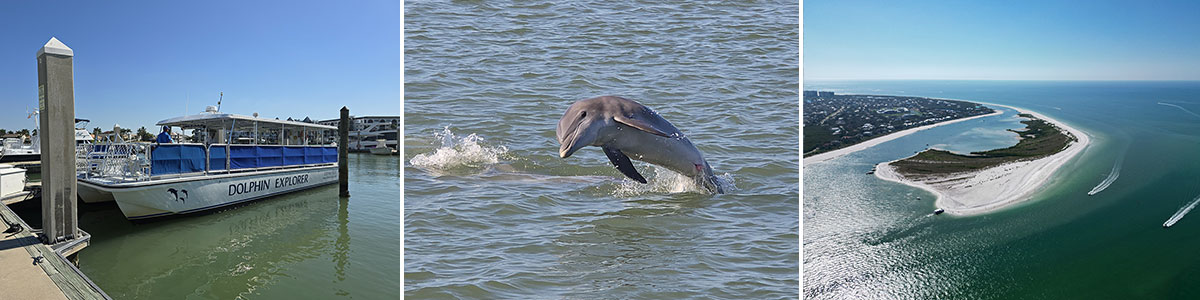
Table of contents
Things to know about Marco Island
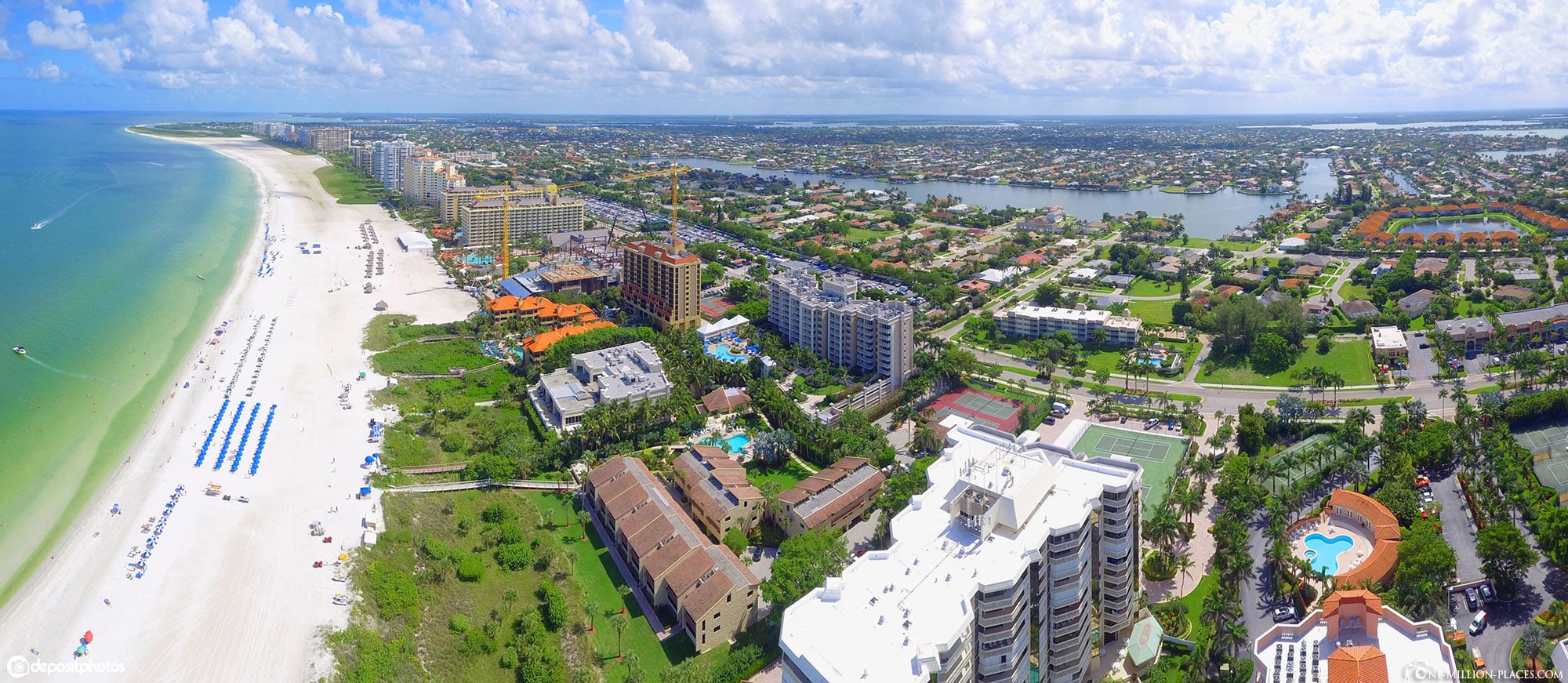
Marco Island is located on Florida’s southwest coast on the Gulf of Mexico, south of Naples, and is one of the best-known starting points for the Ten Thousand Islands. The island is characterized by a mixture of beach sections, residential and vacation areas as well as a dense network of canals, bays and waterways, which makes the region particularly attractive for boat trips.
The number of inhabitants varies noticeably from season to season, as a particularly large number of winter visitors come to Marco Island in the cooler months (December to April), while it is generally quieter outside the main season. The island has a subtropical to tropical climate, with a drier, milder phase in winter and a warm, more humid phase in summer, when short, heavy showers in the afternoon are typical. Well-known highlights include beaches such as South Marco Beach and nature-oriented areas such as Tigertail Beach, where lagoons and stretches of beach combine.
Marco Island in Florida
Interesting facts about the “Dolphin Explorer Tour” in Marco Island
Dolphin Explorer on Marco Island is a dolphin tour that is much more nature-oriented than many classic boat trips in Southwest Florida. The focus is not just on “seeing dolphins”, but on observing and classifying bottlenose dolphins in their habitat around the Ten Thousand Islands.
Behind the tour is the 10,000 Islands Dolphin Study Team, which observes bottlenose dolphins in the waters around the Marco River and the offshore island worlds via photo identification. Individual animals can be recognized, documented and tracked over the years based on their dorsal fins with their individual shape as well as notches and scars. The daily tours are part of a long-term study into the lifestyle of coastal dolphins; over a hundred animals have already been photo-IDed, named, coded and listed in a catalog. This makes the tour exciting for anyone looking for more than just a brief moment of sighting, because every encounter can be placed in a larger context.


In addition to dolphins, other marine animals can be observed depending on the season; manatees (sea cows) are a possible extra in the region, especially between May and September. In addition, the birdlife is often present on the waterways around Marco Island: birds of prey and wading birds such as eagles, ospreys, herons, ibises, pelicans and other species often accompany the trip and provide additional moments of nature.
The tour lasts around 3 hours and usually starts twice a day (morning and afternoon). Departure is at the Rose Marina on Marco Island, and it’s worth getting there about 30 minutes early. The boat itself is also designed for families and comfort. The Dolphin Explorer is a catamaran (47 feet) and is therefore relatively stable on the water – an advantage if someone on board is sensitive. There are seats in the sun as well as in the shade, plus a toilet on board and free water. The tour is rounded off with a search for special shells on an offshore barrier beach, which is like a little treasure hunt, especially for children.
Prices for the tour typically range from around 59-79 US dollars per person, with discounts for children and senior citizens.


Interesting facts about Marco Bay
Our tour started at around 9.20 a.m. and we drove slowly from Rose Marina towards East Marco Bay. We crossed under the S.S. Jolley Bridge, which connects Marco Island with the mainland.
Marco Bay is located on the northeast side of Marco Island (location in Google Maps) and looks less like a wide bay and more like a sheltered, winding transitional space between the island, mangrove shores and the waterway network towards Ten Thousand Islands. Shallow, tide-dependent waters are typical of this area: in many areas close to the shore, the water is often only about knee or waist deep (often roughly 0.5-2 m), while marked fairways and dredged passages can be significantly deeper – especially where boats and marinas need safe access. This landscape was created by a combination of natural coastal dynamics and human alteration: Marco Island itself is part of a barrier island chain formed over thousands of years by sand deposits, currents and sea level rise after the last ice age; behind it, calm, sediment-rich lagoons and estuaries developed, in which fine mud, shingle and sea grass areas are typical. From the 1960s onwards, large-scale “dredge-and-fill” work was also carried out around Marco Island – creating kilometers of residential canals and artificial shorelines, which strongly influence the image of Marco Bay today as a mixture of natural shallow water bay and constructed waterways.


Watching dolphins in East Marco Bay
East Marco Bay is an area that is particularly suitable for dolphin watching because it combines protected water areas, shallow zones, mangrove edges and deeper waters. A lot happens in such transitions: currents can concentrate food, small fish use seagrass and edge areas as protection, and dolphins use the conditions to hunt efficiently or move between different areas.


And it actually didn’t take long until we saw the first dolphins. We stopped the boat again and again and let the dolphins come towards us. We have a total of 18 different Define incl. little offspring during our dolphin tour, one even jumped out of the water ❤


The dolphin tour is also attractive for families because children are often actively involved on board: If a dolphin appears en route that has not yet been listed in the inventory, the group is sometimes even allowed to baptize it – a small highlight that makes the moment extra special. In addition, there is often a kind of “Dolphin Challenge” for children, where they can feel part of the team by helping with sightings, looking out for fin features or answering questions about behavior and habitat.
At the end of the Dolphin Challenge, our kids even received a dolphin badge as a reward 🙂


Boat trip to Sand Dollar Island (Big Marco Pass)
After watching the dolphins for over 1 1/2 hours, we headed back under the S.S. Jolley Bridge, along the Capri Pass into the Gulf of Mexico. Here we did a few laps by boat and then went to an offshore barrier island.


Sand Dollar Island (often called “Sand Dollar Spit”) is a narrow, dynamic sand barrier at Big Marco Pass – the sea passage at the north end of Marco Island that connects lagoon and mangrove areas to the Gulf of Mexico. Unlike a solid island, it is constantly changing: Currents, waves and tides shift sand, causing tongues of sand to grow or erode again, thus constantly forming new flat beach and sandbank areas.


Collecting shells on Sand Dollar Island
When we arrived on Sand Dollar Island, we got a mussel bag and got off the boat barefoot. Southwest Florida feels like a postcard here! Important to know: In this region, currents and sandbanks constantly change the coastline – depending on the year and season, the island can also be more of a sandbank that appears larger or smaller at certain water levels.
In total, we had just over 30 minutes to find a few nice shells. The areas just above the water’s edge and the freshly washed up lines are often particularly rewarding. There you will typically find a mixture of smaller, pretty shells and – with luck – larger pieces such as snail shells (e.g. conchs/whelks). After windy days or changes in the weather, the yield can be significantly better because the sea then “re-sorts”.


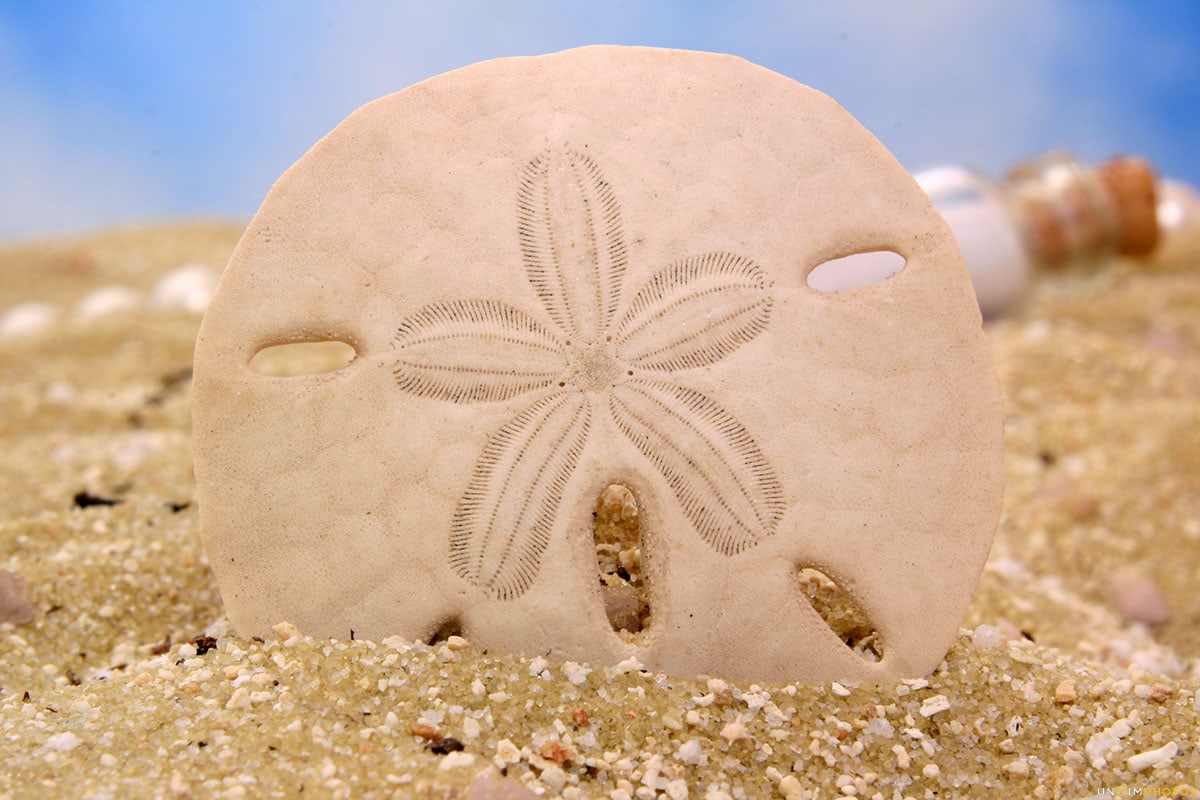
In fact, many beachgoers are on the lookout for a sand dollar – a flat, coin-shaped skeleton of a sea urchin that often lies very brightly on the beach after the sun and salt. They are collected as small “beach treasures”, especially after calm days or light swells, because they are rarely undamaged. Important: Live sand dollars are usually dark and slightly velvety – it is better to put them back into the water carefully.
We found lots of beautiful shells, but unfortunately no sand dollars 😉
Sand Dollar on the beach in Florida

How did we like the dolphin tour on Marco Island?
Other activities on Marco Island
Take a look at GetYourGuide, where you can find lots of other exciting excursions, activities and tours: